Pages

Showing posts with label Kalamine Records. Show all posts

Monday, 30 December 2019

Psymon Marshall - Top 10 2019.


PSYMON’S TOP TEN FOR 2019

It’s that time of year when I attempt to whittle down the hundreds, nay thousands, of worthy records released this year to form my top ten. It’s a thankless task in many ways – it has to be noted that the quality of the material I have listened to, on both a ‘professional’ and personal level, has been, quite frankly, astonishing. I am loathe to leave anything out, but if I did that this would become unwieldy. I could be wrong, but I think that technology and its democratisation is responsible for shining a figurative light into the hidden corners of the underground scene, thereby allowing artists who were once constrained by perpetual obscurity to showcase their material to a broader and receptive audience, as well as allowing them to target those audiences more effectively and at a fraction of the cost. Certainly, when l was involved in the burgeoning scene in the late 80s/early 90s this fantastic virtual arena was unimaginable, and the only way to hear of artists was through the rare occasion a mainstream magazine happened to feature an article on this weird musical scene, or through the pages of an underground ‘zine, or the artists themselves contacting one directly. Now with the plethora of sites like Bandcamp, Soundcloud, Facebook, personal websites and blogs such as this one, obscurity is a mostly a choice.

My only rule for this top ten is that I have reviewed all these records within the last twelve months (or, rather, since I’ve been writing for 1208 North Fuller Ave, Apt 1) and my write-up was published on the blog. There was far too much good material to choose from and, please be assured that, even if a particular record doesn’t appear here, it doesn’t mean I didn’t like it – it’s just that ten is an awfully small number and there are thousands of releases per year. In no particular order then, here’s my selection:


The debut record of the year without any shadow of a doubt, Alessio Antoni brought us a stunningly mature work that normally would be characteristic of an artist’s career peak, rather than one which represents their first release on a major label. Furthermore, the quality is doubly emphasised by the presence of major underground alumni such as Northaunt, Treha Sektori, Taphephobia, Infinexhuma, and Ugasanie amongst others lending their considerable talents to the mix. My reasoning is that they also must have recognised Antoni’s innate talents to have even considered contributing. Seven tracks of haunting, deeply mystical, seismic, and chthonic atmospherics brought forth from the deep time present at the world’s creation, this is an album that deserves its place in any fan of dark ambient’s sound library.


A deep dive into nihilistic dystopian nightmares and disaster-fuelled dreams, this is one of those projects that refuses to let any light dilute their dank and foetid vision of a diminished future humanity and the denuded world they’ll find themselves living in. In my original review I described it as Lovecraftian in atmospheric tone but, some months later while I am writing this, it’s gone beyond that and the whole takes on a tinge of having foreshadowed the current state of our world, Definitely one to listen to while the social fabric and order of civilisation collapses around you.


Here’s a release that takes something that all of us are familiar with (the church organ) and makes it sound otherworldly, creating and devising textures, voices, and tones one wouldn’t normally associate with the venerable instrument. This is a thought-provoking work, in that it blows away ingrained perceptions and assumptions, and shines the spotlight on a new creation that is at once familiar and alien. This nine track album successfully posits the notion that synthesisers have in fact been around for hundreds of years, not mere decades.


I could have quite easily chosen a top ten consisting solely of Cold Spring releases such is the continued quality of output from this long-established label. Instead, I chose Llyn a Cwn’s Twll Du that, apart from being a release of well-crafted atmospheric ambient pieces, also locked into a particularly Celtic ambience that I have experienced personally. Each of the seven compositions is based around feelings and reactions to specific areas within Snowdonia, North Wales, a region which is heavily invested with myth and magic. I’m from South Wales, which has its own similar patches of mystery (the Preseli Mountains, home of the bluestones of Stonehenge) and parts of which are associated with the Mabinogion (an epic of Welsh literature), and so I found myself buying into the mystical and doomy atmospherics with ease. One can very easily glean the nature of the places described herein.


Now for something completely different: a quartet of ambient drone pieces based around tea. It’s a novel approach, one that reaps huge benefits, and that has the effect of being both interesting and intensely calming, allowing the listener to ride waves of bliss. Think of it as an antidote to the stresses of modern-day living, so I can recommend sitting back in your favourite armchair, sipping on a freshly made cup of one (or all) of the teas mentioned in the composition titles, and let yourself just drift away into oceans of infinity.


This was originally ‘released’ way back in 1989 as a limited edition of just 31 tapes, none of which were on general sale but instead given to the artist’s friends. Thankfully, then, the fine folks at Industrial Ölocaust Recordings saw fit to re-release this masterpiece in remastered form (by Raffaele Pezzella of Sonologyst), in a signed edition of 93. Massively occult and deeply seismic in nature, these are all rituals meant to open up the vast underground currents streaming through the bowels of the earth, both physically and spiritually. A timeless set, not at all dated, and in some ways deeply resonant with our present times – in other words, essential listening.


Another (and very welcome) reissue and remaster from the UK’s premier underground label. Apart from being a seminal band from the early industrial music scene of the eighties and nineties, the one aspect of the band that this shows off to perfection is the sheer breadth of vision and musicality that Jhonn Balance and Peter Christopherson possessed, and this emphasises just how successful and far reaching their musical collaboration was. The twelve songs (or thirteen if you have the CD version) are essentially outtakes and experiments gleaned from the recording sessions that ultimately gave us the Love’s Secret Domain album, and as such it adds to the latter release, demonstrating the evolution and thinking processes behind LSD (and the band’s MO). It not only reminds us of the loss of the genius of both Balance and Christopherson (may both RIP) but it will also serve to introduce new fans to this titan of a project of the British industrial scene.


I shall reiterate my description in my original review: ‘This is a BEAST of an album…’. Featuring not only the original six tracks recorded by Caulbearer but also the same tracks with enhancements added by luminaries such as Black Mountain Transmitter, Gruntsplatter, Wilt + Gnaw Their Tongues, Steel Hook Prostheses, The Vomit Arsonist, and Fire in the Head. These are gargantuan behemoths, both original and enhanced, a soundtrack for the end-times, and for a dying and decaying world. Get your doom on!
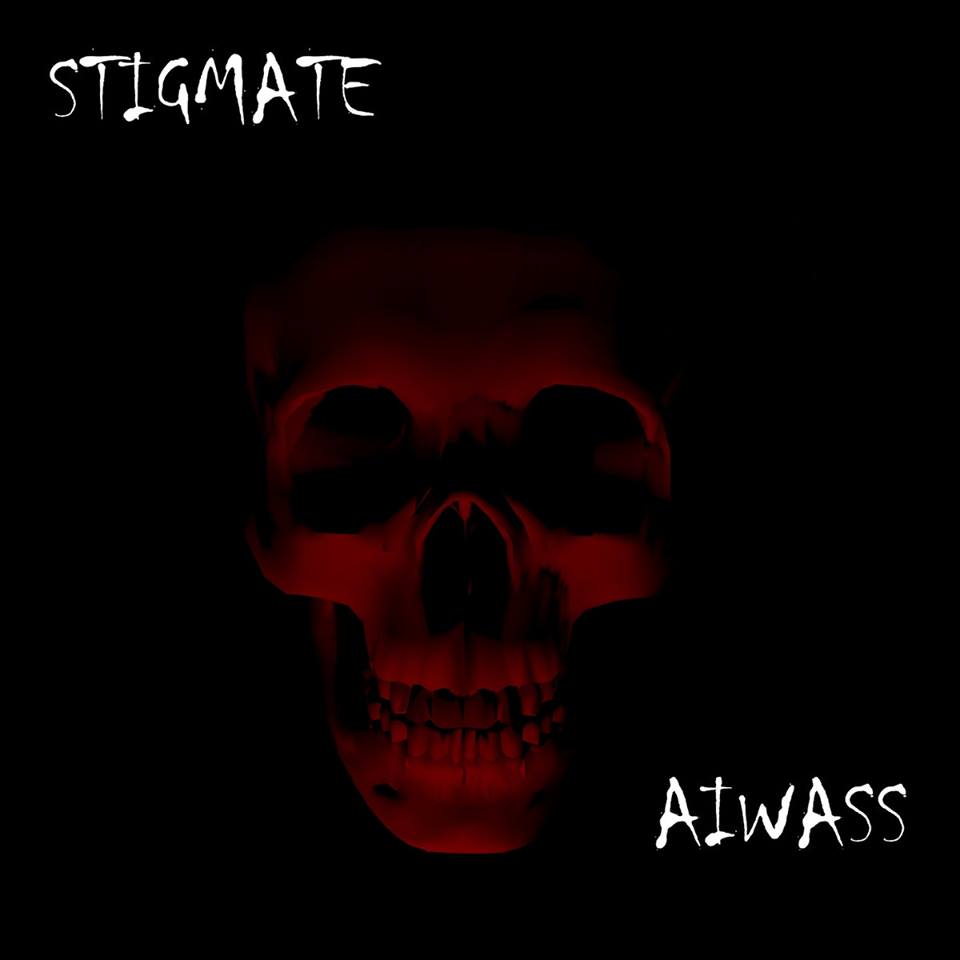

There are hundreds of self-released albums put out each year, and this particular one made it to this list simply because of its holistic approach to the subject and its maturity of expression. Based around your favourite occultist uncle, Aleister Crowley, this takes as its inspiration the birth of Thelema and its subsequent evolution plus its promulgation by Crowley (which was inevitably intertwined with his larger than life character). It’s a serious release, and a seriously good one at that, swerving away from both Crowleyan aggrandisement and tabloid sensationalism, as well as treating the subject seriously. Nicola Locci, the man behind the project, appears to have been working on this for a long time, and in the process gave it a lot of thought, which shines through every note on here. Quite a cerebral release, and well worth your time in listening to.


Four tracks, yet all magnificently sweeping in their cold and frozen glory, this is a sonic study of glacial ambience at its peak of perfection (in human terms anyway). Icy landscapes and skies filled with the crystalline and sharp beauty of the stars, planets, and faint nebulae comprising the band of the Milky Way Galaxy, this lifts the listener bodily skywards and deposits us right in the midst of the polar regions of the earth. I can readily envisage lying in a glass igloo looking up at the pristine vault of the heavens whilst being cocooned in these blankets of sound, my spirit able to feel and to touch those stars, planets, and faint nebulae. Glorious and breathtaking: that’s all you need to know about this fine release.

So that’s it! I hope you like my selection, and apologies to any whose output didn’t make it here. 2019 was the year I rediscovered my love of off-the-wall and non-mainstream music, and I feel richer for having listened to just about everything I’ve been sent (and I will finally get around to reviewing the ones I received in December). If this last year was anything to go by, then 2020 should be another bumper year – buckle up!

Psymon Marshall 2019. 

Monday, 28 October 2019

Lavatone - The Blue Boar.


Artist: Lavatone
Catalogue no: N/A

Tracklist:
     1.      Monolith
     2.      The Blue Boar
     3.      Empty Room
     4.      Shelter in Place


I’ve only heard Lavatone once before and that was only a single track on Kalamine Records’ Inside/Beside 3 compilation which came out some months ago. And now along comes a four-track album from this Texan one-man drone outfit, allowing me to get a deeper feel for his music and his sensibilities. And, of course, allowing me to see whether this so far extremely interesting and quality French netlabel has yet again released a winner.

‘Monolith’, at eight minutes or so the shortest of the tracks on here, pretty much hits the ground running with a rasping and grinding bass tone which provides a vehicle for hornlike drones, a fanfare blaring from the verandas of some vast edifice, huge braziers ablaze at either end sending columns of scented smoke skyward. Imagine a kind of ziggurat towering into the heavens, flanked by endless sets of steps all leading to a temple structure at its top. The mass of stone is enough to intimidate by itself, let alone the sheer size of the building. A slow steady pounding beat measures out the pulse of proceedings, a sonorous affair, a ritual of sacrifice and perhaps appeasement. A lowering grey cloudscape only adds to the feeling of oppressive intimidation, a weight that bows the shoulders of all who stand or kneel at its feet.

The album’s title track cues up next, howling winds and ringing reverberant tones winging their way in from somewhere far off, a mass of denseness floating in the sky to block the sun and its warming rays. It feels like a glowering presence up there, a sentient ‘thing’ observing all that happens below, a god-like entity judging everyone and everything. Snarling feedback and guttural growls radiate its inherent malignity, a solid slab of hatred and malice given actual form. Its baleful influence and searching stare are physical qualities, designed to be threatening and to serve as a warning: do not step out of line or act against what we think is right.

‘Empty Room’ delineates a truly cavernous space, beginning with an atonal screech of strings that’s immediately followed by a deeply growling hurricane of drone and howls, as if the very bowels of the earth are letting rip, screaming out its antipathy and animus against those who have claimed the surface as their kingdom by rights. These battering groans swirl and coil, reaching out to fill every available inch of space in the subterrestrial caverns, only to be amplified by the echoing stone itself and accumulate into a bestial bellowing of enormous proportions. Accompanying the grumbles and roars are smaller creatures, snarling and grunting in empathy. The slow heartbeat and pulsing of the earth itself is the metronome to this blasting symphony, a cacophonic and searing jet of antagonistic complaint.

Finally, ‘Shelter in Place’ marks the end of the album, and its ambience is much calmer and less calamitous – indeed, I would even go so far as to say that, at least initially, it’s a quietly soporific wash of soothing waves, a hymnal floating serenely somewhere in the mid-atmosphere. Gradually, though, antipathetic elements encroach upon its blissful shores, introducing some grainier and insalubrious notes, generating a sense of thrilling alarm. But soon enough it seems that equilibrium is restored, and whatever black clouds started to appear on the horizon have dissolved and disappeared, and we are once again treated to exquisite harmonics, slightly distorted but that only makes them all the sweeter for that.

I find myself having to say that yet again Kalamine have released another high quality album, one that should satisfy any ardent drone fan out there. The Blue Boar is one of those recordings that make it all look so easy, but also making us aware on a careful listen that that definitely isn’t the case: it sounds complicated because it’s carefully layered, using the simplest of ingredients and elements. It comes down to how this brew is put together that makes it as good as it is – there are no unnecessary additions or adornments, just the absolute minimum needed to create the moods and ambiences. It always makes me think just how intimate musicians must need to be with the nature of sound and its properties in order to produce such finely attuned sonic tapestries. Lavatone has definitely mastered the intricacies of sound judging by this, as a consequence crafting a grandiose weft and warp of subterranean and elevated ambient aesthetics simultaneously. Excellent stuff!

Available as a download from the Kalamine Records Bandcamp page:

Psymon Marshall 2019. 

Thursday, 24 October 2019

Eisenlager - Schattenwölfe und Kraken


Artist: Eisenlager
Catalogue no: N/A

Tracklist:
     1.      Shae am Grünen Arm
     2.      Königsmund
     3.      Mätresse
     4.      Schwarzwasser
     5.      Turm der Hand
     6.      Im Roten Bergfried
     7.      Ich bin Euer, und ihr seid mein
     8.      Defensivtaktik
     9.      Tyrions Wutausbruch
    10.  Mein Löwe


If there’s anything I’ve learned with regards to Kalamine Records it’s to expect the unexpected, and this new one from Eisenlager was something I definitely wasn’t expecting. This drags us along into the territory marked on the map as experimental electro-acoustic, with side trips to ambient and noise, utilising all manner of artefacts and artifices to create truly weird and wonderful audio landscapes on worlds which are bizarre mirrors and inversions of the one we inhabit. It’s as if Eisenlager are inviting us to reflect upon our own environments, and then to contemplate how, with a slight twist of reality, things could potentially be so very different.

Take ‘Shae am Grünen Arm’ (Shae on the Green Arm), as a prime example, which just so happens to be the opening track. It begins with a distorted tinkling piano piece, presumably taken from an old vinyl record, before noisy rumblings come along and subsume it, interrupting the flow and completely inverting the mood. Gradually a mechanical rhythm takes over, reminding one of old-school industrial from the mid-nineties era, jerking and stuttering like some automated factory machine that’s been running for who knows how long and is on the verge of running out of power. It’s the sound of ordered decay, the steady dissolution of energy and movement, the powering down of obsolete technology perhaps. In complete contrast ‘Köningsmund’ (King[’s] Mouth) comes to us from the opposite end of the spectrum, even though it begins with a mishmash of samples and sounds until it broadens out into an ambient skyscape of blue horizons and rolling green hills. It shimmers and shines by its own neon-bright light, swirling and swooping endlessly, settling to earth and almost immediately taking flight again. As it progresses, however, there are signs of encroaching gloom appearing, as if saying that nothing is ever permanent or remains static, and that motion is perpetual.
 
‘Mätresse’ (‘Mistress’) is a curious concatenation of twinkling music box tinkles and stuttering electro beats, accompanied by miraculously hanging chords as if of some distant choir. This too is an open landscape, perhaps of a harmonious admixture of the old and the new, of technology and the organic and natural, where each element complements the other. ‘Schwartzwasser’ (Blackwater) is next, a sharp, nervous bag of urgent energy, all finely-honed edges and blade-like steeliness. Chaos, madness, and anarchy lie behind this, but something is just managing to contain it: even so it’s just waiting for some trigger to detonate it in one huge orgasmic explosion. ‘Turm der Hand’ (Tower of the Hand) is disorganised and atonal, at least initially, until it settles into a series of mesmerising echoes and reverberations, like drips of sparkling water. Again, this is a clean and clear landscape, a pristine untouched environment whose beauty is frozen both physically and metaphysically.

‘Im Roten Bergfried’ (In the Red Keep) suggests something grandiose, implacable, made of impregnable stone, and forever unassailable. From its trumpet and flute opening we get the feeling we’re approaching some old Schloss somewhere in the medieval heart of Germany, until almighty distorted guitar chords, entirely suggestive of heavy mass, weight (both physical weight and the weight of time), and solidity, rear up walls of impenetrability and permanency before our very eyes, taunting and daring us to tear them down.  ‘Ich bin Euer, und ihr seid mein’ (I am Yours, and You are Mine’) hoves into view next, shimmering dulcimer tones cascading over each other, like the expectant, trilling shivers one feels when in the presence of one’s soulmate. It even ends on a smooth, jazzy note.

‘Defensivtaktik’ (Defensive Tactics) wafts in on soaring and ringing notes, floating skywards and into the blue, almost in a shoegazy and languid style. It is breathtakingly beautiful up here in the clouds, and also breathtakingly cold. This is one way to avoid the teeming masses below, a way of asserting one’s personal freedoms and turning away from the collective madness that is ‘society’. ‘Tyrions Wutausbruch’ (Tyrion’s Outburst) is a stomping electronic pounding accompanied by urgent high notes falling over each other, a mass of pent-up energy and barely-contained frustration. I wonder if this is a reference to Game of Thrones by the way, as Tyrion Lannister is a main character in that drama…

And now to the longest track (and final) track on this album, ‘Mein Löwe’ (My Lion) which opens with a sweet ethereal Eno-esque ambience, which eventually gets backed up by a trippy, loping beat that sails along serenely on invisible airborne currents, lifting us up bodily from the sordid details of earthbound existence and into the rarefied heavenly realms. Stars twinkle at our onward progress, lighting our way, and guiding us ever forward. This is absolutely my favourite on this release, a high point in what is already an album of incredible quality, and is a sweet note to round off the set with. I certainly feel blissed out on the waves of soulfulness emanating from this magical construct.

Schattenwölfe und Kraken (Shadowwolves and Octopuses) is an album of contrasts, containing a broad spectrum of expressions and emotions, every one of which demands complete immersion and interaction from the listener. This a complete tapestry, delineating a wide range of human experiences and feelings, created by a master musician with an eye for fine detail and nuance, a sculptor of sound-material every bit as familiar with his medium as a carver is with wood or stone. When I say this is a stunning album, I mean it. When Eisenlager expounds his thesis of nothing is ever static, he carries it over into every composition – none of these tracks speaks of stasis or even of formula, just a direct conversation with the materials at his disposal. More than that however, is the fact that having the material is one thing, but being able to fully realise the potential of those materials is another. Eisenlager is a deft manipulator, knowing exactly how to extract the essence of each to best effect. Utterly bewitching and full of marvels.

Available as a digital download from the Kalamine Records Bandcamp page:

Psymon Marshall 2019. 

Saturday, 5 October 2019

Philippe Simon - RIL


Album: RIL
Artist: Philippe Simon
Catalogue no: N/A

Tracklist:  
     1.      RIL 1
     2.      RIL 2
     3.      RIL 3
     4.      RIL 4
     5.      RIL 5
     6.      RIL 6
     7.      RIL 7
     8.      RIL 8
     9.      RIL 9


Here’s the question of the day: what happens when an 83 year-old painter, musician, and photographer gets hold of a Korg M50 and a Nord Lead? The answer is that you get Philippe Simon, and on this showing he very much comes from the Berlin School of electronic music (which is no bad thing – if it hadn’t been for the likes of Tangerine Dream, Ashra, Edgar Froese, and Klaus Schulze then in all likelihood the kind of genres we listen to probably wouldn’t exist or would exist in a diminished form), with plenty of rhythm sequencing and meandering lead lines superimposed. In fact, Simon loves his music so much that he has apparently recorded 200 albums so far!

I make no bones about the fact that the Berlin School is where my musical journey began in the mid-seventies, with Tangerine Dream’s Rubycon (which is still my favourite TD album to this day, which still receives a regular listen). Without wishing to make lazy comparisons or to labour the point too much Simon’s music is very much in the mould of what I would consider as mid-period TD, where the side-long compositions had almost been replaced by shorter pieces, the rhythmic sequencing was also still a strong component, and the lead lines on top still exhibited some of the exploratory flowing improvisatory tunefulness the Berlin trio were known for. RIL is very much an album of ambient mood pieces, each of which is highly reminiscent of a time when the term ‘New Age’ appeared to mean something genuinely metaphysical and not a crass commercial opportunity to sell bland meaningless music. Pleasingly, there’s an unpretentiousness about this whole enterprise which is refreshing; this is just a man enjoying himself making the kind of music he likes, without any reference to pleasing anyone other than himself. Having said that, even though there’s nothing especially complex about the music on here, neither is there anything naïve or crude about its execution.

‘RIL 1’ starts off with a medium tempo bass sequence that sounds vaguely Eastern in flavour, which provides the framework for some ringing tones to hang on to. It evokes imagery of magnificent temples draped with dark velvet wall hangings, exotic sigils of entities whose names have been forgotten adorning them, fires burning in braziers, and plumes of musky incense floating ceilingwards. ‘RIL 2’ has a diametrically-opposed atmosphere to it, one of tinkling iciness, like dripping icicles thawing after a deep snowbound winter. It’s still bitingly cold, but the sky is crystal clear with a shining sun, tiny rivulets of freezing water are beginning to push their way over rock to form ever-strengthening waterfalls, and small patches of green are starting to appear from beneath the blanket of snow. Number 3 in the series carries forward the feeling of new life stirring after a cold, hard winter shutting out any signs of life. Everything is resurgent, new energy is flowing, and soon it will erupt.

‘RIL 4’ takes us in a new direction and slows the pace down, a ponderous beat upholding wisps of ethereal tonalities and echoes. This is the blooming of renascent life, slow but colourful, that is now taking over the monochromatic canvas that was winter. Petals unfurl, leaves sprout from branches, long-dormant animals awaken after their hibernations and take their first breaths of crisp new air. ‘RIL 5’ sweeps in on a long drone oscillation, upon which a horn-like figure sounds out, an announcement that nature is once again in the ascendant and will rule for another season.

‘RIL 6’ introduces a completely different mood entirely now; ghostly winds and a regular beat that could be mistaken for footsteps. Imagine an abandoned building, empty and forlorn, a brick and plaster shell where every tiny nuance of sound, no matter how small, takes on a significance that is out of proportion to its size. Are these natural sounds, animals or insects, perhaps? Or are they something more sinister and deliberate? It’s best to keep yourself alert, and be aware of your surroundings.

The next track, ‘RIL 7’, takes off in yet another direction, an almost cartoonish horror soundtrack, perhaps the opening to some kind of Addams Family-esque programme. This is not meant to be derogatory in any sense, as I found this to be extremely fun and jolly in its own dark way. It also breaks up the atmosphere of the rest of the album, injecting a little humour into it, before grandiose drone chords sweep in at the beginning of ‘RIL 8’, the penultimate track. This paints pictures of sweeping landscapes, wind-worn outcrops of rock, and scudding clouds, and our eye is eventually drawn to an impressive and monolithic edifice reaching up towards the blackening sky. ‘RIL 9’ is a fine track to end with, almost Vangelis-like in scope and sweep, utilising almost the same type of metrics as the Greek composer. It’s magisterial, immense, and imperious, a beautiful sunset on an equally beautiful world. As the sky turns purple and the ground darkens to silhouettes, the last vestiges of colour seep away to allow the glorious majesty of the celestial spectacle of the stars and galaxies to take their place in the limelight. .

This is pure delight from beginning to end, a series of tableaux hermetically complete, and telling stories bigger than the space they take up. This is from a man who is an artist in the true sense of the epithet, highly receptive to the world around him, sensing its moods and caprices, and translating those reactions into music, paintings, and photographs. Each piece is a precise summary of what he’s attempting to say, and in the process broadcasting those sensations to the listener. This runs the gamut from the deepest depths and right up to the highest heavens. If you possess a fondness or even just a passing acknowledgement of the debt that the present underground music scene has to the early electronic music oeuvre, then give this a go.

Available as a download from the Kalamine Records Bandcamp page:

Psymon Marshall 2019. 

Thursday, 26 September 2019

SRVTR - Bombs.


Album: Bombs
Artist: SRVTR
Label: Kalamine Records
Catalogue no: N/A

Tracklist:
     1.      Elvissa
     2.      El Raval
     3.      Son Sardina
     4.      VC2


There are quite a few labels whose output I look forward to, and Kalamine Records is one of them. This little netlabel from Bordeaux (I am still hoping that the proprietor of Kalamine, Zumaia, will one day send me some fine examples of that region’s sublime red wines… *wink wink*) continues to upload some quality noise ambient and dark ambient works that deserve broader exposure. This latest release from SRVTR is no exception, and more than that it represents exceptional value for money in that there’s 65 minutes of exploratory sounds on here for whatever you wish to pay for it. I really do believe that at some point that the label will evolve into an entity that’s even better and an essential reference point for the best in such music.

‘Elvissa’, this album’s 30 minute opening track, is pure noise ambient/electronic/rhythmic industrial, starting out as nothing more than an oscillating and twisting belching over which the sound of a jet engine wafts in to gradually overwhelm it, but then, as the track goes on, it slowly evolves into a mammoth mechanical rhythm that sends it into overdrive. I have no shame in admitting I was grooving to it in a shameless industrial-stylee, my head involuntarily nodding along with it. The change is so subtle it’s there before you’re even aware of it, the noise blast lulling you into a false sense of security. It’s almost as if the requisite elements physically coalesced under their own gravity from the particles of noise, and after achieving the necessary density, sparked into rhythmic life. Wonderful stuff.

How do you follow that up? In SRVTR’s case by giving us another lengthy track of stuttering, shimmering, clangourous noise that pans from side to side, and sounds for all the world like a massive electronic device about to disintegrate, and as it progresses it appears to be on the verge of exploding, the timer counting down. ‘Son Sardina’ (which Google translated as ‘They are Sardine’) is the shortest track on the album, being only 5 minutes long, but nevertheless manages to pack a lot in. It’s a dense conglomeration of drones packed closely together, almost airless and with no spaces in between the layers.

And then, for the twenty minutes following on from that, we get the final track, ‘VC2’. A rattling howling sound, just like the sound you’d get from rolling metallic granules in a tube, is our introduction to the track, while a whine floats deep in the mix and somehow elevates it above the norm for a noise track. To be fair though this is noise ambient, a grade of noise that eschews blasts of pure grind and static in favour of subtle layers of complementary sounds (in this case at least) that end up making colourful tapestries with nuanced gradations of tone and frequencies. I found it to be a joyous noise, because it carries with it an exuberance and abandon that’s marvellous to hear. At roughly the halfway point it abandons its earthbound bass heaviness and takes off into the atmosphere, a jet-propelled airplane of the future, sailing amongst the clouds. Up here where the air is clear the world below looks small and insignificant, and the works of man are merely blotches and stains on the land below. Up here is where real freedom is to be found.

Whatever criteria Kalamine Records follow in choosing what to release, it’s obvious that the bar has been set very high. So far, at least the ones I have had a chance to assess, they’ve been thoughtful and exhilarating, creating complex virtual worlds exquisite in their detail, bringing colour and nuance, and provoking thoughts about our own relationships with the world around us. Many of the releases bridge the gap between avant-garde, experimental minimalism, and the best of dark ambient sound sculptures. Bombs is another of this breed, taking raw materials that in lesser hands would perhaps wind up as carbon copies of what’s been done a thousand times before, but instead twisting the threads and fibres into an artefact that rises above the morass. Furthermore, it isn’t afraid of mixing in elements from across the genre spectrum to adorn the pieces with. There’s a lot going on within the confines of these four pieces, each one having a unique and expressive voice, moulding and shaping our responses to each individual composition. And, in my book, that’s all you can ask of music.

Another quality release from Bordeaux, available from the Kalamine Records Bandcamp page as a download and stream:

Psymon Marshall 2019

Monday, 9 September 2019

Various - Inside/Beside 3


Album: Inside/Beside 3
Artist: Various
Label: Kalamine Records
Catalogue no: N/A

Tracklist:
     1.      Yann Pillas – Dialogue Between Crickets and Kraken
     2.      Ben Presto – Open Window—Aube à Villa Lagarina
     3.      Billy Yfantis – Bird in Ventilation
     4.      I, Eternal – En Auxois
     5.      Peter Wullen – Faces of the Grass
     6.      Mean Flow – Earth Dies
     7.      Muwn – Nature’s Heart
     8.      Wanqa – Bird
     9.      Saint de l’Abîme – Machinery Rusts Beaten by the Rainforest.
    10.  RG Rough – Waterfall
    11.  Lavatone – A Jet Flying over a Creek near Aberdeen, Texas
    12.  Larbjo – Aftermath
    13.  Lezet – Stream
    14.  Zumaia – Defectus
   15.  Uruly – Que Vanha a Chuva! (Só os Fortes Entenderão… Ou os Que Gostam de Chapéu) (6x mais lento)
    16.  BR – Chernobyl’s Prayer
    17.  Nimbostrata – Råstasjön Meditation


I mentioned in my review of DR’s Tea Sessions album recently just how impressed I was by France’s Kalamine Records’ output, and this compilation has done nothing to diminish my opinion. This is the third in the Inside/Beside series, and if this is the measure of the quality on the previous two entries then I am just going to have to gird my loins and investigate them too.

This is a ‘name your own price’ release, and for whatever you decide to give you get 17 tracks of drone, dark ambient, experimental, electronic, and industrial sound tapestries, whose general theme is an ecological one. Track one, Yann Pillas’ ‘Dialogue Between Crickets and Kraken’ is exactly that, opening with the chirruping of crickets at twilight, until they fade out to be replaced by a ringing siren, a harbinger of, or a signal to, something deeper and darker lurking in the depths, waiting for darkness so it can emerge with impunity. Punctuations of underwater distortions presage its arrival, an answering call and an acknowledgement that the time is propitious. We are greeted with yet more natural sounds on ‘Open Window--Aube à Villa Lagarina’ but this time of birds singing against a susurrating backdrop, with incidental sounds and an organ gently fading in but never quite supplanting nature’s orchestra. Continuing with yet more nods to avian life, Billy Yfantis’ ‘Bird in Ventilator’ is pretty much that – a chirping bird carolling over a deep machine drone.

I, Eternal’s ‘En Auxois’ appears on the face of it to be a freeform percussive piece, using what appear to be metallic and wooden instruments, but could just actually be a field recording of a herd of Auxois horses … saying that doesn’t invalidate it as a distinctly abstract sound collage, however: for some these are everyday sounds, but for those of us outside this culture it’s a way of creating alien vistas as well as informing us of the bizarre nature, when heard in isolation, of the sounds we ignore every day in our own lives.

Next up is Peter Wullen’s ‘Face of the Grass’, and again we are treated to the sounds of birds competing with the phrase “faces of the grass” looped endlessly. Mean Flow’s ‘Earth Dies’ is a lament for what we’ve lost and are continuing to lose, as the earth and its life is slowly strangled and suffocated. Here we have more natural sounds, over which plays a forlorn piano figure accompanied by a plucked melody– a sad indictment too of our wilful ignorance in denying our deleterious impact on the world. Muwn’s ambient ‘Nature’s Heart’ is a crunching walk on a hollow drone, a delicate path leading into the secret centres of Nature itself, where its beating heart resides. Here again natural sounds, buzzing and whispering, assail our ears, a reminder that perhaps we aren’t the masters after all, only the guardians.

Following on from this is ‘Bird’ by Wanqa, a gentle flute and guitar refrain lulling you into a false sense of comfort until a female voice, completely out of tune and off-key interjects, destroying whatever harmony was there. Balance is restored with a guitar melody, but the memory of the voice lingers, perhaps signalling that it is humanity that’s the sour note in Nature’s symphony. A mechanical bass note stalks the opening of Saint l’Abîme’s ‘Machinery Rusts Beaten by the Rainforest’, stomping through a place where life abounds aplenty, all the while singing a weird melody, one which breaks up and disintegrates. What I get from this is that, whatever happens to us, Nature will prevail over our legacy – it’s not the pliant entity we imagine it to be. ‘Waterfall’, by RG Rough, is a beautiful column of dark ambient drone, swelling and receding, but forever in motion. Lavatone’s contribution features sounds of waterfowl, upon a quiet creek somewhere (presumably in Aberdeen, Texas), until a jet aircraft soars high above – this reminded me of my childhood summers, when I would hear a distant jet engine, look up into a perfectly blue sky, and see the white speck of an airliner trailing vapours overhead. It sounds exactly like this: ground-level sounds carry on without interruption while the booming sounds echo from far above.

Larbjo experiments with metallic belches and glitchiness, presenting us with a fractured soundscape of dismembered and misremembered events. Lezet’s ‘Stream’ starts with a laughing duck (or so it sounds like) while a distant thrumming melody plays in the background. Zumaia’s ‘Defectus’ wings in on a scratchy high-pitched howl which stretches out for its entire running time, sounding like a desolate lament to a ravaged Earth. It’s not a particularly optimistic piece – winds rage across a denuded world, the flora and fauna long-since vanished, leaving behind a waterless and airless world of pale rock and sickly dust.

Uruly’s ‘Que Vanha a Chuva (Só os Fortes Entenderão… Ou os Que Gostam de Chapéu) (6x mais lento)’ (which translated means ‘The Rain Comes! (Only the Strong Will Understand… Or the Hatters) (6x slower)’) is a two minute blast of wall noise, blistering and abrasive – pretty much what will happen if the Earth dies by our hands. ‘Chernobyl’s Prayer’, composed by BR, is the longest track on here (just shy of 15 minutes) and is a kind of rhythmic noise blast, not as ear-wax melting as the previous offering but just as effective in portraying ruin, erosion, and the utter degradation of an entire planet. Like Uruly’s effort it doesn’t offer any rays of hope, or sunshine for that matter, instead piling layer upon layer of darkness and suffocation. In other words, a funeral pall for Gaia.

‘Råstasjön Meditation’ closes out the album, and here Nimbostratus leaves us with a quiet susurration, with the apparent objective of being a calming antidote to the obliterative blasts of nuclear serration on the previous tracks. However, that’s just superficial: the rumbles and voices at the end tell a different story, that this is now a ghost world, a place of lost people and lost memories, a haunted rock, where the shades of the living wander about in abject despair. If Hell exists, then we’ve created it ourselves: our ignorance and denial have conspired to bring us to this pass, and now there is no return. The saddest aspect is that there’s nothing and no one to remember us, only the universe and we never mattered to it in the first place. It’s a very sobering conclusion, one we should take note of.
Taken in the round, this not just a warning but a plea: a plea for action before it all disappears. A request that we leave behind human greed and covetousness, ignorance and denial, and instead embrace concern and compassion for not only our fellow people but also everything that calls this Earth its home. As many have pointed out, there is no Planet B: this is our only home. Listening to this merely brings home the beauty and splendour that we are destroying – and it is also a savage appraisal of the shortcomings of our species.

Available from the Kalamine Records Bandcamp page as a download:

Psymon Marshall 2019.